Please Choose Your Language
Views: 0 Author: Site Editor Publish Time: 2026-10-27 Origin: Site
FF&E vs OS&E is an important distinction in hotel planning, budgeting, and procurement. FF&E stands for Furniture, Fixtures, and Equipment, while OS&E means Operating Supplies and Equipment. Both categories support guest comfort and hotel operations, but they differ in purpose, purchasing frequency, and management requirements.
Understanding these differences helps hotel owners, developers, designers, and purchasing teams plan projects more effectively. This guide explains common examples, budgeting considerations, procurement processes, and practical ways to manage both categories.
FF&E includes furniture, fixtures, and equipment used to furnish hotel spaces. Examples include beds, desks, sofas, tables, wardrobes, and selected lighting or electronic equipment. These items usually remain in service for an extended period, although their lifespan depends on quality, usage, and maintenance.
OS&E includes operating supplies and equipment needed for daily hotel services. Common examples are bed linens, towels, tableware, cleaning supplies, uniforms, and guest amenities. Many OS&E items require frequent replenishment because they are consumed, worn out, or used intensively.
The exact classification may vary by hotel project and procurement standards. For example, some equipment may be classified differently depending on its function and the project's accounting policy.
| Comparison | FF&E | OS&E |
|---|---|---|
| Full name | Furniture, Fixtures, and Equipment | Operating Supplies and Equipment |
| Main purpose | Furnishes and equips hotel spaces | Supports daily services and operations |
| Common examples | Beds, desks, sofas, wardrobes, tables | Linens, towels, glassware, toiletries, uniforms |
| Purchasing pattern | Often planned for projects or renovations | Often includes recurring orders and replenishment |
| Management focus | Design, specifications, durability, delivery, and maintenance | Stock levels, usage, hygiene, quality, and replacement |
FF&E establishes the physical setting, while OS&E supports the daily guest experience. A hotel room, for example, may contain a bed frame, desk, wardrobe, and seating as FF&E. Bed linens, towels, hangers, and guest amenities are typically managed as OS&E.
Both categories should be planned together. A room is not ready for guests simply because its furniture has been installed; it also needs the supplies required for housekeeping and service.
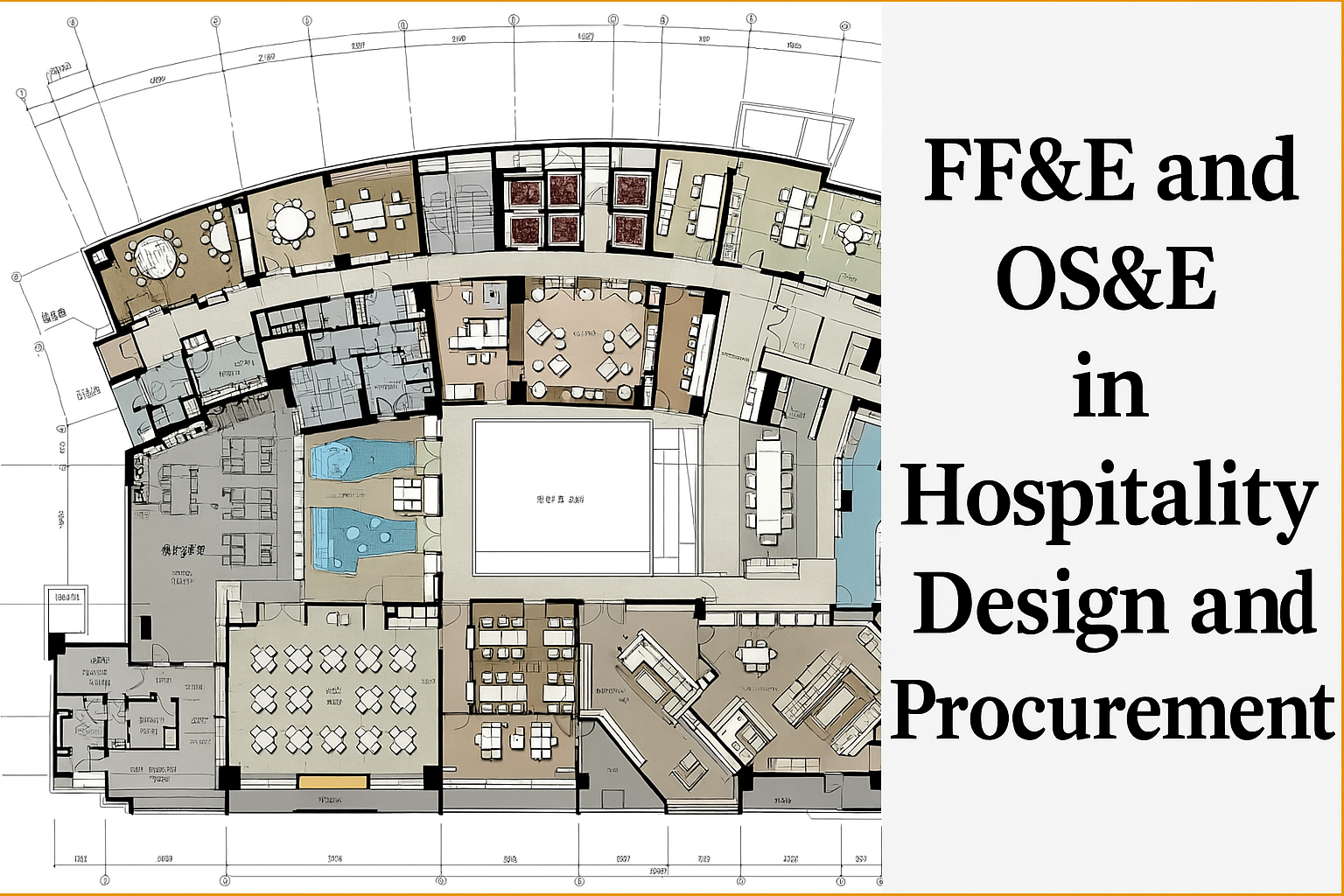
The items required depend on the property's size, service level, facilities, and brand standards.
FF&E may include:
Guest rooms: Beds, headboards, nightstands, desks, chairs, sofas, wardrobes, and dressers.
Lobbies and lounges: Reception desks, sofas, lounge chairs, coffee tables, and display units.
Restaurants and meeting rooms: Dining tables, chairs, banquet furniture, and conference tables.
Other equipment: Selected lighting, televisions, minibars, safes, and audiovisual equipment, depending on project specifications.
For hotel developers and interior designers, FF&E selection should align with room layouts, design drawings, durability requirements, and brand standards. Explore hotel furniture products to review furniture categories for different hotel spaces.
OS&E commonly includes:
Guest room supplies: Bed linens, towels, hangers, toiletries, and coffee-making supplies.
Food and beverage supplies: Plates, cutlery, glassware, napkins, and serving utensils.
Housekeeping supplies: Cleaning products, laundry supplies, carts, and related tools.
Staff and office supplies: Uniforms, stationery, and other items required for daily operations.
A clear item list helps teams assign purchasing responsibilities and reduce the risk of missing essential supplies before opening.
FF&E and OS&E need separate budget planning because their purchasing patterns and management needs are different.
FF&E is commonly included in hotel development, fit-out, and renovation budgets. Costs depend on the quantity, materials, customization, quality requirements, shipping, installation, and project scope.
Teams should confirm furniture specifications and quantities early. Changes made after production begins may affect costs and delivery schedules.
Accounting treatment depends on the applicable accounting standards and the hotel's capitalization policy. Qualifying FF&E may be recorded as a long-term asset and depreciated over its estimated useful life. Useful lives and depreciation methods should not be assumed to be identical across all properties.
OS&E budgets should account for opening stock, expected consumption, replacement needs, and ongoing operations. Hotels may need larger initial quantities before opening and regular replenishment once occupancy increases.
Not every OS&E item is necessarily treated as an operating expense. The accounting treatment of durable equipment may depend on cost thresholds and the property's policies.
Practical tip: Create separate FF&E and OS&E schedules, then coordinate them with the overall project budget. This makes it easier to track purchasing, identify missing items, and manage cash flow.
FF&E and OS&E require different procurement approaches. Coordinating both schedules helps prevent delays and shortages during hotel opening or renovation.
FF&E purchasing often begins during design development or project planning. Custom furniture may require approved drawings, material samples, mock-ups, production, shipping, and installation.
Lead times vary by supplier, customization level, order quantity, shipping method, and destination. Instead of relying on a universal timeline, confirm milestones with suppliers and align deliveries with site readiness.
For more detail, see the guide to hotel FF&E installation.
OS&E planning focuses on quantities, storage, consumption rates, and replenishment. Hotels can set par levels—the stock quantities needed to support operations—and define reorder points for essential supplies.
Inventory records should track stock on hand, usage, incoming orders, and expiry dates where relevant. This helps purchasing teams avoid both shortages and excessive stock.
Hotel procurement teams should confirm item specifications, delivery dates, packaging requirements, storage arrangements, and inspection procedures. For FF&E, coordination with designers, contractors, and installers is especially important. For OS&E, purchasing teams need clear communication with housekeeping, food and beverage, and other operating departments.
FF&E and OS&E also require different management routines after a hotel opens.
Furniture and equipment should be inspected and maintained according to material, usage, manufacturer guidance, and hotel standards. Tasks may include cleaning upholstery, checking hardware, repairing surface damage, and planning refurbishment.
A preventive maintenance schedule can help extend service life and identify problems before they affect guests. Replacement decisions should consider condition, repair costs, safety, appearance, and operational needs.
OS&E management requires regular stock checks and quality inspections. Housekeeping and food and beverage teams should identify worn linens, damaged tableware, expired supplies, and other items that need replacement.
Clear storage labels, assigned responsibilities, and routine inventory reviews can reduce waste and make restocking more reliable.
Successful hotel projects coordinate FF&E and OS&E from the planning stage rather than treating them as unrelated purchasing tasks.
For example, restaurant furniture should match the planned seating layout and service flow. Tableware, serving equipment, and linens must also suit the restaurant's menu, service style, and expected guest volume.
In guest rooms, furniture dimensions and storage arrangements affect where supplies can be stored and how housekeeping staff prepare each room. Coordination between designers, procurement teams, and hotel operators helps ensure that both categories meet the property's functional and design requirements.
Reviewing real hotel furniture projects can help teams understand how furniture choices support different spaces. Explore Hongye's hotel furniture projects for examples of furniture used across guest rooms and public areas.

FF&E and OS&E serve different but complementary roles in hotel management. FF&E provides the furniture and equipment needed to furnish hotel spaces, while OS&E supports daily services through supplies and operational items.
Clear classification, coordinated budgets, realistic procurement schedules, and consistent inventory management help hotel teams prepare for opening and maintain service quality. By planning both categories together, project teams can improve purchasing coordination and create spaces that meet design and operational needs.
FF&E refers to furniture, fixtures, and equipment used to furnish hotel spaces. OS&E covers operating supplies and equipment needed for daily hotel services.
Common examples include beds, desks, wardrobes, sofas, dining tables, chairs, and selected lighting or electronic equipment.
Examples include linens, towels, toiletries, tableware, cleaning supplies, uniforms, and other daily operating items.
They are usually planned separately because their purchasing and replacement patterns differ. Accounting treatment depends on the applicable standards and the hotel's policies.
Coordinated planning helps ensure that furnished spaces also have the supplies needed for housekeeping, dining, and other services. It can reduce procurement gaps and support a smoother hotel opening.