Please Choose Your Language
Views: 0 Author: Site Editor Publish Time: 2026-01-07 Origin: Site
Are you ready to transform your hotel lobby?
Hotel lobby design is crucial for creating lasting first impressions. As the hospitality industry evolves, staying updated with design trends is essential.
In this post, we’ll explore the top six hotel lobby design ideas for 2025. You’ll learn how to enhance guest experiences and elevate your space.
Hotel lobby design has come a long way. In the past, lobbies were primarily functional spaces, often overlooked. They served as mere transition areas between the outside world and guest rooms. However, today, lobbies are vibrant hubs that reflect a hotel’s brand identity and enhance guest experiences.
Key Factors Influencing Changes in Design:
● Technology: The rise of smart technology has transformed how lobbies function. Features like digital check-in kiosks and smart lighting systems create a seamless experience for guests.
● Guest Preferences: Modern travelers seek comfort and personalization. They want spaces that cater to their needs, whether for work or relaxation.
● Sustainability: Eco-friendly materials and practices are now essential. Hotels are increasingly using sustainable resources, which appeal to environmentally conscious guests.
The pandemic significantly altered guest expectations. Safety and health have become top priorities. Many hotel lobbies now incorporate features that promote social distancing and hygiene.
Changes in Guest Expectations Post-Pandemic:
● Guests prefer spacious, open layouts that allow for physical distancing.
● There is a demand for contactless services, such as mobile check-ins and virtual concierge options.
Shift Towards Flexible and Health-Conscious Designs:
Designers are rethinking lobby layouts to enhance safety. This includes:
● Modular Furniture: Flexible seating arrangements allow easy reconfiguration based on guest flow.
● Natural Light and Ventilation: Increased use of windows and open spaces promotes airflow, making guests feel safer.
Here’s a quick overview of how these trends have evolved:
Trend | Before COVID-19 | Post-COVID-19 |
Layout | Compact and functional | Spacious and flexible |
Technology Integration | Basic amenities | Advanced, contactless solutions |
Guest Experience Focus | Standardized services | Personalized, health-conscious options |
As we move forward, hotel lobby design will continue to adapt to meet changing needs. The emphasis on comfort, technology, and sustainability will shape the future of these essential spaces.
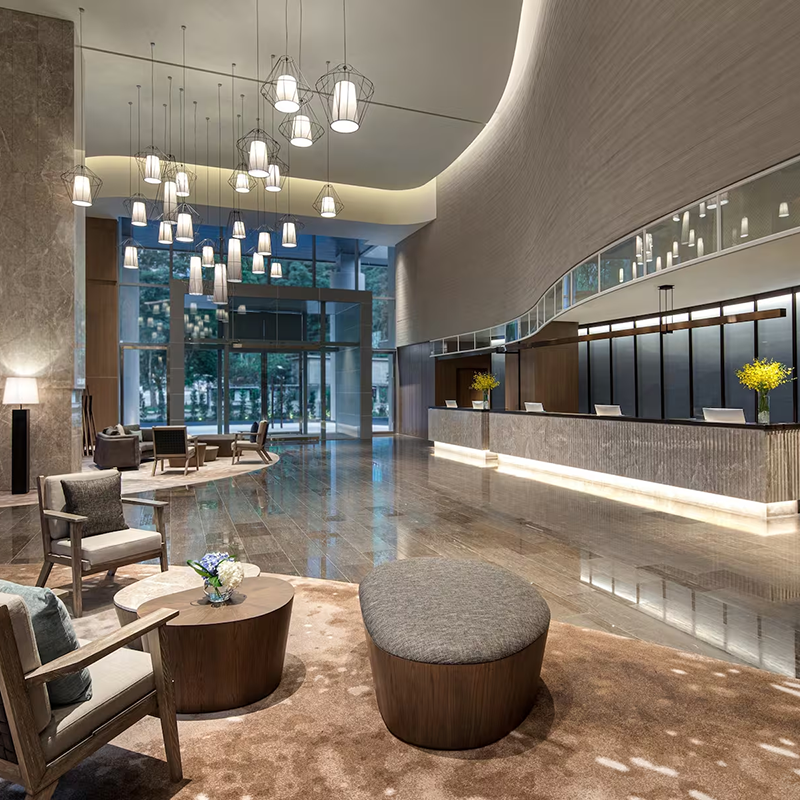
Biophilic design is all about connecting people to nature within built environments. This design philosophy promotes well-being by integrating natural elements into spaces. It recognizes how important nature is for our mental and physical health. By incorporating these elements, hotel lobbies can create inviting atmospheres that enhance guest experiences.
When designing a biophilic lobby, several key components can make a significant impact:
● Greenery: Adding plants, living walls, and indoor trees brings the outdoors inside. These features not only beautify the space but also improve air quality. For instance, a living wall can serve as a stunning focal point while filtering toxins from the air.
● Natural Materials: Using materials like stone and wood creates a warm, inviting feel. These textures evoke a sense of comfort and connection to nature. HONGYE Furniture Group emphasizes this approach by using FSC-certified wood in their designs, ensuring sustainability while enhancing aesthetics.
● Water Features and Natural Light: Incorporating water elements, such as fountains or small ponds, adds tranquility to the lobby. The sound of flowing water can create a calming atmosphere. Additionally, maximizing natural light through large windows or skylights brightens the space and promotes a positive mood.
The advantages of biophilic design extend beyond aesthetics. Here’s how it can enhance the hotel lobby experience:
● Enhancing Guest Well-Being: Studies show that exposure to natural elements can reduce stress and anxiety. Guests feel more relaxed and comfortable in spaces that reflect nature.
● Improving Air Quality: Plants naturally filter indoor air, reducing pollutants and improving overall air quality. This contributes to a healthier environment for guests and staff alike.
● Creating a Serene Atmosphere: A well-designed biophilic lobby can evoke feelings of peace and relaxation. This ambiance encourages guests to linger, enhancing their overall experience.
HONGYE Furniture Group is a prime example of how to effectively implement biophilic design principles. Their lobby furniture incorporates sustainable materials, such as:
Material | Description |
FSC-Certified Wood | Sourced from responsibly managed forests, ensuring sustainability. |
Eco-Friendly Finishes | Low-VOC finishes that promote better indoor air quality. |
By focusing on these sustainable practices, HONGYE not only enhances the aesthetic appeal of hotel lobbies but also supports environmental responsibility. Their designs exemplify how biophilic elements can be seamlessly integrated into functional furniture, creating beautiful and health-conscious spaces for guests.
Imagine stepping into a hotel lobby that feels like a cozy living room. This design trend creates warm, inviting spaces where guests can relax and socialize. The goal is to make visitors feel at home, encouraging them to linger and enjoy their surroundings. A well-designed living room lobby features comfortable seating, soft lighting, and a welcoming atmosphere.
Several elements contribute to the success of a living room lobby:
● Zoning with Rugs and Furniture Groupings: By using area rugs and strategically placed furniture, designers can create distinct zones within the lobby. These areas can serve different purposes, such as casual conversation spots or quiet reading corners. For example, a plush rug can define a seating area, making it feel more intimate.
● Incorporation of Cozy Features: Adding elements like fireplaces or library corners enhances the home-like feel. A fireplace creates a focal point, inviting guests to gather around. Meanwhile, a small library corner filled with books and comfortable chairs encourages relaxation and social interaction.
A lifestyle "living room" lobby offers numerous benefits for guests. It fosters a welcoming atmosphere where people can connect and unwind. Here’s how:
● Encouraging Socialization: The inviting layout promotes conversations among guests. Comfortable seating arrangements encourage people to sit down, chat, and enjoy their time together.
● Creating Relaxation Spaces: Guests can escape the hustle and bustle of travel. The cozy environment provides a perfect spot to relax, read, or even work on a laptop.
HONGYE Furniture Group excels in creating tailored furniture solutions that fit the lifestyle lobby concept. Their designs focus on comfort and aesthetics, aligning perfectly with a hotel’s brand identity.
Furniture Type | Description |
Modular Sofas | Flexible seating options that can be rearranged for various group sizes. |
Cozy Armchairs | Comfortable chairs that invite guests to sit and relax for a while. |
Stylish Coffee Tables | Functional tables that serve as focal points for conversation areas. |
By incorporating HONGYE’s custom furniture, hotels can create a living room lobby that not only looks great but also enhances the overall guest experience. This approach ensures that every element contributes to a warm, inviting atmosphere, making guests feel right at home.
Multi-use spaces are versatile areas within hotel lobbies designed to serve various functions. These spaces are essential in modern hotel design, as they adapt to the diverse needs of guests. With the rise of remote work and social interaction, hotels must create environments that cater to different activities, from business meetings to casual gatherings.
To effectively serve multiple purposes, certain features are vital in multi-use spaces:
● Communal Tables with Power Outlets: Large communal tables equipped with power outlets are perfect for remote work. Guests can plug in their devices while enjoying a coffee or engaging in discussions. This setup encourages collaboration and makes the lobby a productive workspace.
● Adaptable Food and Beverage Areas: Flexible dining options are crucial. Whether it’s a quick snack or a full meal, these areas should accommodate various dining styles. For instance, movable furniture can easily transform from casual seating to dining arrangements for events.
Creating multi-use spaces is not just about aesthetics; it significantly enhances the guest experience. Here’s why they matter:
● Catering to Diverse Guest Needs: Today’s travelers have varied preferences. Some might want to work, while others seek a place to relax or socialize. Multi-use spaces provide the flexibility to meet these different needs, making guests feel more at home.
● Enhancing the Functionality of Hotel Lobbies: By maximizing the use of space, hotels can offer more amenities without expanding their footprint. This efficiency allows for better guest flow and utilization of common areas.
HONGYE Furniture Group understands the importance of adaptable designs in hotel lobbies. They offer modular seating solutions that can be reconfigured based on guest flow and specific events.
Furniture Type | Description |
Modular Sofas | Configurable sofas that can be arranged in various layouts. |
Movable Chairs and Tables | Lightweight furniture that can be easily moved to create different setups. |
Flexible Partitioning | Options for separating spaces while maintaining an open feel. |
By incorporating HONGYE’s flexible furniture, hotels can ensure their lobbies remain dynamic and responsive to guest needs. This adaptability not only enhances the overall experience but also supports the evolving landscape of hospitality.
Statement pieces are oversized focal points that draw attention and set the tone for a hotel lobby. These bold elements can be anything from large sculptures to striking lighting fixtures. Their impact goes beyond aesthetics; they create a sense of drama and intrigue, making guests feel welcomed and engaged right from the entrance.
Integrating local art into hotel lobbies is a powerful way to tell stories and connect with the community. When guests encounter art that reflects the local culture, it enhances their experience and provides a deeper understanding of the area.
● Importance of Local Storytelling: Local art installations allow hotels to showcase the heritage and spirit of the region. This storytelling aspect resonates with guests, making their stay more memorable.
● Examples of Local Art Enhancing Identity: Consider a lobby adorned with murals depicting local landscapes or sculptures made by regional artists. These elements not only beautify the space but also create a unique identity for the hotel, distinguishing it from others.
Incorporating bold statement pieces and local art offers several advantages:
● Creating Memorable Experiences: Guests are more likely to remember a hotel that features unique and striking decor. This memorability can lead to positive reviews and repeat visits.
● Fostering a Sense of Place: When guests see art that reflects the local culture, they feel more connected to the destination. This sense of place enhances their overall experience and encourages them to explore more of the area.
HONGYE Furniture Group provides a range of decorative elements that can serve as stunning statement pieces in hotel lobbies. Their offerings include:
Product Type | Description |
Large Sculptures | Eye-catching sculptures that create focal points in the lobby. |
Artistic Lighting Fixtures | Unique lighting designs that enhance the ambiance while serving as art. |
Decorative Stone Elements | Textured stone pieces that add a natural, luxurious feel to the space. |
By incorporating HONGYE’s decorative arts and stone products, hotels can effectively create inviting and memorable lobbies. These elements not only enhance the visual appeal but also contribute to a rich narrative that guests will cherish during their stay.
Technology is revolutionizing hotel lobby design, making it smarter and more responsive to guest needs. With the rise of smart technology trends, hotels are integrating advanced features that enhance both aesthetics and functionality. From automated systems to interactive displays, technology is reshaping how guests interact with their environment.
To create a modern, tech-savvy lobby, consider incorporating these essential features:
● Digital Check-In Kiosks: These kiosks streamline the check-in process, allowing guests to bypass long lines. They can quickly complete their registration and receive room keys, enhancing convenience right from the start.
● Smart Lighting: Integrating smart lighting systems allows for customizable ambiance throughout the lobby. These systems can adjust brightness and color based on the time of day or specific events, creating a welcoming atmosphere.
● Charging Stations Integrated into Furniture: Guests often need to charge their devices while on the go. By embedding charging stations into lobby furniture, hotels provide a practical solution that keeps guests connected without cluttering the space.
Integrating technology into hotel lobbies is not just a trend; it's essential for several reasons:
● Enhancing Guest Convenience: Technology simplifies processes, making it easier for guests to navigate their stay. Whether checking in or finding information, tech solutions improve the overall experience.
● Operational Efficiency: Smart technology can streamline hotel operations, reducing staff workload and improving service delivery. This efficiency allows hotel staff to focus on providing exceptional guest experiences.
HONGYE Furniture Group is at the forefront of integrating technology into furniture design. Their smart production techniques utilize AI-driven processes to ensure high-quality, tech-friendly furniture solutions.
Feature | Description |
AI-Driven Design | Advanced algorithms optimize furniture design for functionality and aesthetics. |
Tech-Integrated Solutions | Furniture designed to accommodate charging ports and other tech features seamlessly. |
Sustainable Practices | Eco-friendly materials and processes that align with modern design trends. |
By choosing HONGYE’s innovative furniture, hotels can ensure their lobbies are not only stylish but also equipped with the latest technology. This integration enhances the guest experience while supporting operational excellence, making technology an indispensable part of modern hotel lobby design.
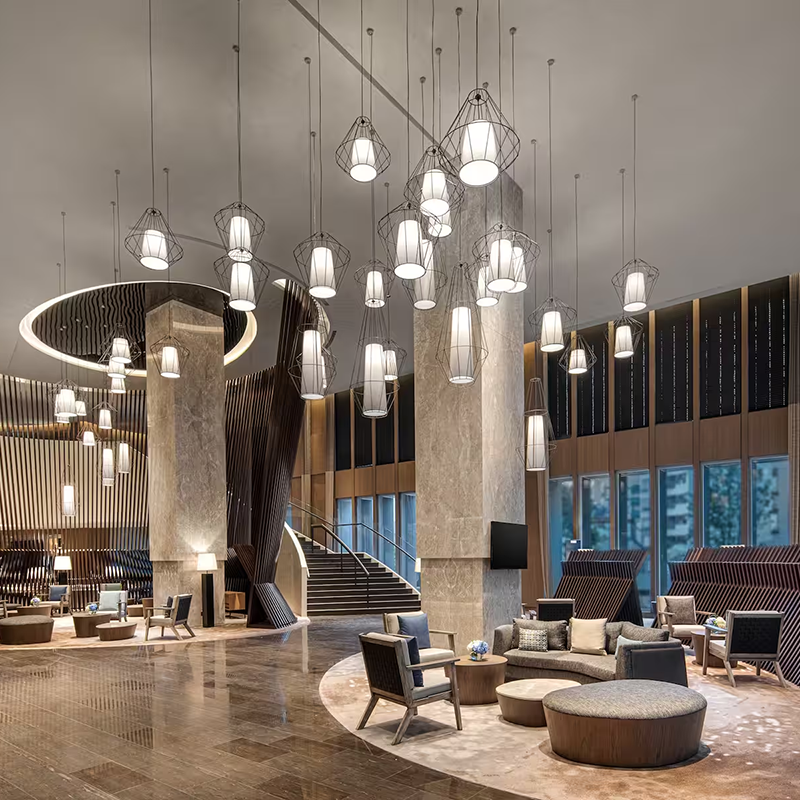
Sensory experiences in hotel lobby design engage all five senses to create a rich, immersive environment. This approach goes beyond visual appeal; it seeks to evoke emotions and memories through sound, smell, touch, and even taste. By thoughtfully integrating sensory elements, hotels can transform their lobbies into memorable spaces that resonate with guests long after their stay.
To craft an engaging sensory experience, consider these key elements:
● Signature Scents: Introducing unique scents can significantly influence how guests perceive a space. For instance, a refreshing citrus scent can energize the atmosphere, while calming lavender promotes relaxation. Establishing a signature scent can become part of the hotel's identity.
● Curated Soundscapes: The right background music or ambient sounds can enhance the overall experience. Soft instrumental music or nature sounds create a soothing environment, making guests feel more at ease. This auditory backdrop complements the visual and tactile aspects of the lobby.
● Layered Textures: Incorporating various textures adds depth to the lobby design. Consider plush seating, smooth stone surfaces, and warm wooden elements. These tactile contrasts invite guests to touch and interact with their surroundings, enhancing their connection to the space.
Creating sensory experiences in hotel lobbies has profound effects on guests. Here’s how these elements contribute to a memorable stay:
● Memorable Environments: Engaging multiple senses helps guests form lasting memories. A well-designed sensory experience can turn a simple lobby into a unique destination, encouraging guests to return.
● Immersive Atmospheres: When all senses are engaged, guests are more likely to feel immersed in their environment. This immersion fosters relaxation and enjoyment, making their stay more pleasant.
HONGYE Furniture Group emphasizes quality in every aspect of their designs, enhancing sensory appeal through careful material selection and craftsmanship. Their stringent quality assurance processes ensure that each piece not only looks great but also feels wonderful.
Quality Aspect | Description |
Material Selection | Use of high-quality, tactile materials that enhance sensory experiences. |
Craftsmanship | Attention to detail in construction, ensuring durability and comfort. |
Design Aesthetics | Thoughtful designs that consider visual and tactile appeal for guests. |
By focusing on these quality elements, HONGYE creates furniture that complements the sensory experiences in hotel lobbies. This commitment to excellence helps hotels offer environments that are not only beautiful but also deeply engaging for guests.
In summary, the top 6 hotel lobby design ideas for 2025 include integrated multi-use spaces, bold statement pieces, seamless technology, and enhanced sensory experiences.
Innovative hotel lobby design is crucial for creating memorable guest experiences.
Hotel owners and designers should embrace these trends to stay competitive.
We encourage readers to share their thoughts or experiences with hotel lobby design.