Please Choose Your Language
Views: 0 Author: Site Editor Publish Time: 2026-10-27 Origin: Site
Choosing the right nightstand height improves comfort, accessibility, and bedroom design. A table that is too low or too high can make everyday tasks less convenient.
As a starting point, choose a nightstand close to the top of your mattress. A height within about 1–2 inches above or below the mattress is a useful guideline, but it is not a strict rule. Your bed design, personal habits, and room layout also matter.
This guide explains how to measure your bed, compare nightstand heights, and select suitable bedside furniture for residential and hotel projects.
The ideal nightstand height depends on the finished height of your mattress. Measure from the floor to the mattress top, including any topper you regularly use.
A nightstand near this height usually makes bedside items easier to reach. You can access a phone, book, lamp, or glass of water without reaching far up or down.
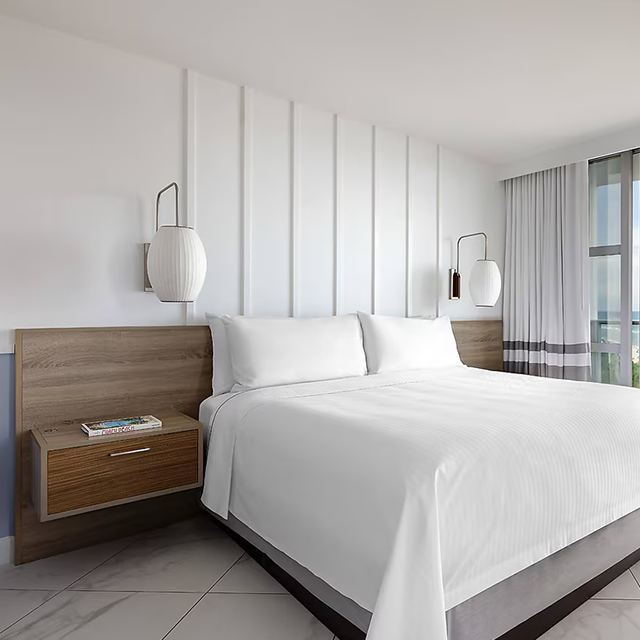
| Finished Mattress Height | Example Nightstand Height Range |
|---|---|
| 18–22 inches | 18–24 inches |
| 23–27 inches | 22–29 inches |
| 28–32 inches | 27–34 inches |
These ranges are practical starting points, not fixed standards. Choose the final height based on reach, furniture proportions, and the intended use.
A nightstand slightly above the mattress may suit someone who often sits up in bed. A slightly lower surface may work better for other layouts. Test the height whenever possible before making a final decision.
Tip: Compare the top of the nightstand with the top of the mattress, rather than measuring only the bed frame.
Accurate measurements help prevent sizing mistakes, especially when ordering furniture online or specifying hotel room furniture.
Place a tape measure vertically beside the bed. Measure from the floor to the top surface of the mattress.
Include the bed frame and foundation in the overall measurement only through their effect on mattress height. The final measurement should represent the actual sleeping surface.
Toppers and thick pads can raise the sleeping surface. Measure the bed in its normal setup, including any layers that will remain in use.
For example, a mattress measuring 24 inches above the floor will reach 26 inches after adding a 2-inch topper. The nightstand should be selected using the final measurement.
Measure both sides if the floor is uneven or the bed setup differs. Consider future changes to the mattress or bed base before ordering furniture.
Note: For hotel projects, confirm the final mattress specification before approving nightstand drawings or production.
Different bed designs can require different bedside furniture dimensions. Use the finished mattress height as your starting point.
Platform beds often have a lower profile. A compact nightstand can preserve the clean proportions of the room. However, do not choose a table solely because it is marketed for platform beds. Check the actual mattress height first.
Traditional beds vary in height because of differences in frames, foundations, and mattresses. Measure the complete setup instead of assuming that a standard bed has a standard height.
Pillow-top mattresses and raised bed bases can create a higher sleeping surface. A taller nightstand may make bedside items easier to reach and maintain a balanced appearance.
For adjustable beds, check the mattress position you use most often. Also make sure bedside furniture does not obstruct the bed's movement.
Height is important, but it is only one part of choosing a suitable nightstand.
The nightstand should provide enough space for everyday essentials without crowding the room. Check the available floor area, bed size, walking clearance, and storage needs.
In small bedrooms, a narrower design may preserve circulation space. Larger rooms may accommodate wider furniture, provided it remains proportional to the bed.
The lamp should provide comfortable light for reading without shining directly into your eyes. Test the combined height of the nightstand and lamp while sitting in bed.
Wall sconces can free up tabletop space. Their position should be checked from the user's normal reading position, rather than selected from a single universal measurement.
Drawers can conceal personal items, while open shelves provide quick access. Hotel nightstands may also need space for charging devices, lighting controls, and other guest essentials.
Consider how guests or residents will use the furniture before deciding on the layout.
Hotel furniture needs to balance guest comfort, room layout, brand design, and project specifications. A suitable nightstand height should be confirmed against the selected bed and mattress, not chosen in isolation.
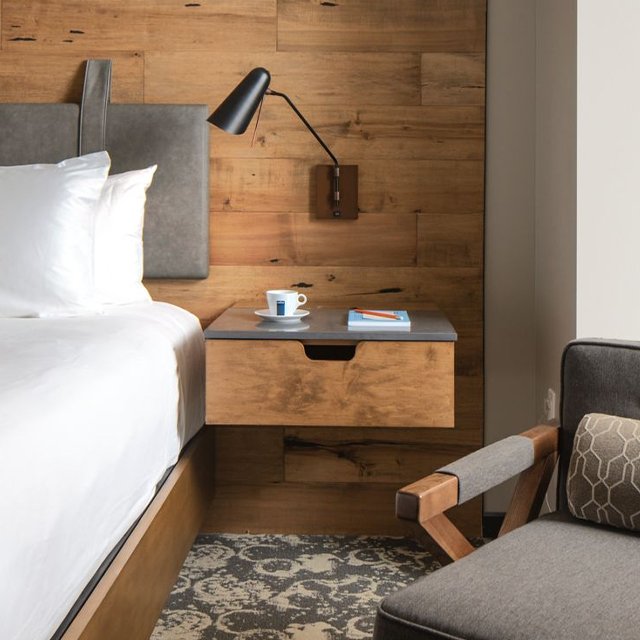
Hotel buyers should confirm the finished mattress height, bedside clearance, headboard design, and electrical layout. These details help prevent conflicts during installation.
Review product drawings and samples where possible. For multi-room projects, confirm that dimensions and finishes remain consistent across the order.
Fixed nightstands can integrate with headboards or wall panels. Freestanding models offer more flexibility when room layouts change.
The right option depends on the project design, installation method, maintenance needs, and available space.
HY Hotel Furniture offers hotel bedside furniture for hospitality projects. Buyers can review the Hotel Bedside Table collection and the Hotel Night Stand collection.
For a coordinated room design, explore the Luxury Suite Furniture collection. Confirm available dimensions and customization options with the supplier before finalizing project specifications.
A few simple checks can help avoid an uncomfortable or poorly proportioned setup.
Measuring only the bed frame: Measure to the top of the finished mattress.
Ignoring mattress toppers: Include every layer that changes the final sleeping height.
Choosing by appearance alone: Check access to bedside items before ordering.
Overlooking room clearance: Make sure drawers can open and guests can move around the bed.
Assuming one size fits every project: Verify dimensions for each bed type and room layout.
If a nightstand is too low or too high, replacing it with a better-sized model is usually the simplest solution. For fixed furniture, confirm the mounting height and installation requirements before work begins.
The best nightstand height is usually close to the top of the mattress, but the right choice depends on comfort, bed design, and room layout. Measure the finished mattress height, include toppers, and check how easily you can reach bedside items.
For hotel projects, confirm dimensions alongside the bed, headboard, lighting, and electrical layout. Careful planning helps create a comfortable guest room and reduces avoidable sizing issues.
A nightstand close to the mattress top is a useful starting point. A difference of about 1–2 inches above or below can work, depending on comfort and design.
Measure vertically from the floor to the top of the mattress. Include any topper or pad that will remain in use.
Neither position is always best. Choose a height that allows comfortable access to bedside items and looks balanced beside the bed.
Not always. Platform beds often sit lower, but the actual mattress height should guide your decision.
Hotels should confirm mattress height, room clearance, headboard design, lighting, electrical access, and project-specific furniture dimensions before production.