Views: 0 Author: Site Editor Publish Time: 2026-09-18 Origin: Site
Hotel bars face constant wear from heavy traffic, spilled drinks, and clinking glassware. Your hotel modern bar cabinets must handle these daily demands without losing their good looks. Stainless steel, solid wood, marine-grade plywood, high-pressure laminate (HPL), and quartz stand out as durable materials for this purpose. You need commercial-grade materials that resist scratches, moisture, and heat. Smart selection of bar cabinet materials protects your investment. Commercial-grade cabinets built from high-quality materials deliver lasting performance. This guide examines material performance across these options. You will also learn about wood vs metal, durability and environmental tolerance, maintenance and lifecycle costs, sustainability and certifications, and the specific demands of hotel back bar cabinets.
Table of Contents
Pick stainless steel or HPL for busy bars; both stand up well to moisture and scratches.
Solid wood needs protective coatings and sealants to last in damp bar settings.
Quartz never needs to be sealed; its surface does not let stains in and is easy to clean.
Combine materials such as stainless steel tops with wood fronts to get both strength and a cozy feel.
HPL gives you a cheap choice that resists scratches and moisture well for back bars.
Choose wood with FSC certification and GreenGuard Gold to make sure it is sustainable and safe for the air.
Paying more at the start for good materials saves you money over time.
Stainless steel sets the benchmark for durability in commercial bar settings. This non-porous metal resists stains and moisture, which makes it ideal for high-traffic hotel back bar cabinets. Spilled wine, citrus juice, and melted ice cannot penetrate the surface. A quick wipe removes residue before it causes damage. You get a surface that stays hygienic and presentable through years of daily service.
Stainless steel performs well under the constant stress of a working bar. The material handles heavy glassware, rapid temperature changes, and frequent cleaning without warping or cracking.
Stainless steel does not absorb water. This property prevents swelling, mold growth, and surface degradation in humid bar environments. Hot pans and warmed glassware pose no threat to the surface. NSF/ANSI 51 sets the industry standard for commercial foodservice equipment. It requires cleanability, corrosion resistance, heat resistance, and coating adhesion. Hotel bar cabinets fall under this standard. Stainless steel surfaces near food and water must remain stable and resistant to their use environment.
Stainless steel resists scratches from glassware and impacts from dropped bottles. The surface may show minor scuffs over time, but it will not chip or crack like other materials. Grade selection matters for long-term performance. The table below compares common stainless steel grades.
Attribute | 304 Stainless | 201 Stainless | 316 Stainless |
|---|---|---|---|
Chromium | 18–20% | 16–18% | 16–18% |
Nickel | 8–10.5% | 3.5–5.5% | 10–14% |
Molybdenum | Not specified | Not specified | 2–3% |
Max Carbon | 0.08% | 0.15% | 0.08% |
Corrosion Behavior | Strong general corrosion resistance | Weaker pitting resistance (lower nickel) | Best chloride and pitting resistance |
Typical Use | Residential cabinetry, food service interiors | Cost-driven enclosures, indoor non-corrosive use | Coastal kitchens, chemical and marine service |
Cost Band | Baseline | Lower than 304 | Significantly above 304 |
Grade 304 suits most indoor hotel bars. Grade 316 offers superior chloride resistance for coastal properties. Grade 201 works for cost-driven indoor applications with low corrosion risk.
Stainless steel requires specific cleaning agents to maintain a streak-free finish. Fingerprints and smudges appear easily on the surface. You need a microfiber cloth and a stainless steel cleaner for daily upkeep. Avoid abrasive pads and chlorine-based products. These items can dull the finish or cause pitting over time. A consistent cleaning routine protects the metal and preserves its shine.
Stainless steel complements contemporary bar designs. The sleek surface pairs well with wood, glass, and stone. You can specify brushed, polished, or matte finishes to match your venue's style. The material supports aesthetics and guest perception by projecting cleanliness and professionalism. Commercial-grade cabinets built from stainless steel deliver a modern look that lasts.
Solid hardwood frames with strong joints hold weight much better than particleboard. A bar cabinet holds bottles, glassware, and ice buckets every day. Particleboard falls apart under that weight. Hardwood stays strong for years.
Oak, maple, and walnut have dense grain that stands up to daily wear. These woods take stains and protective finishes well. You get a surface that ages with character instead of breaking down.
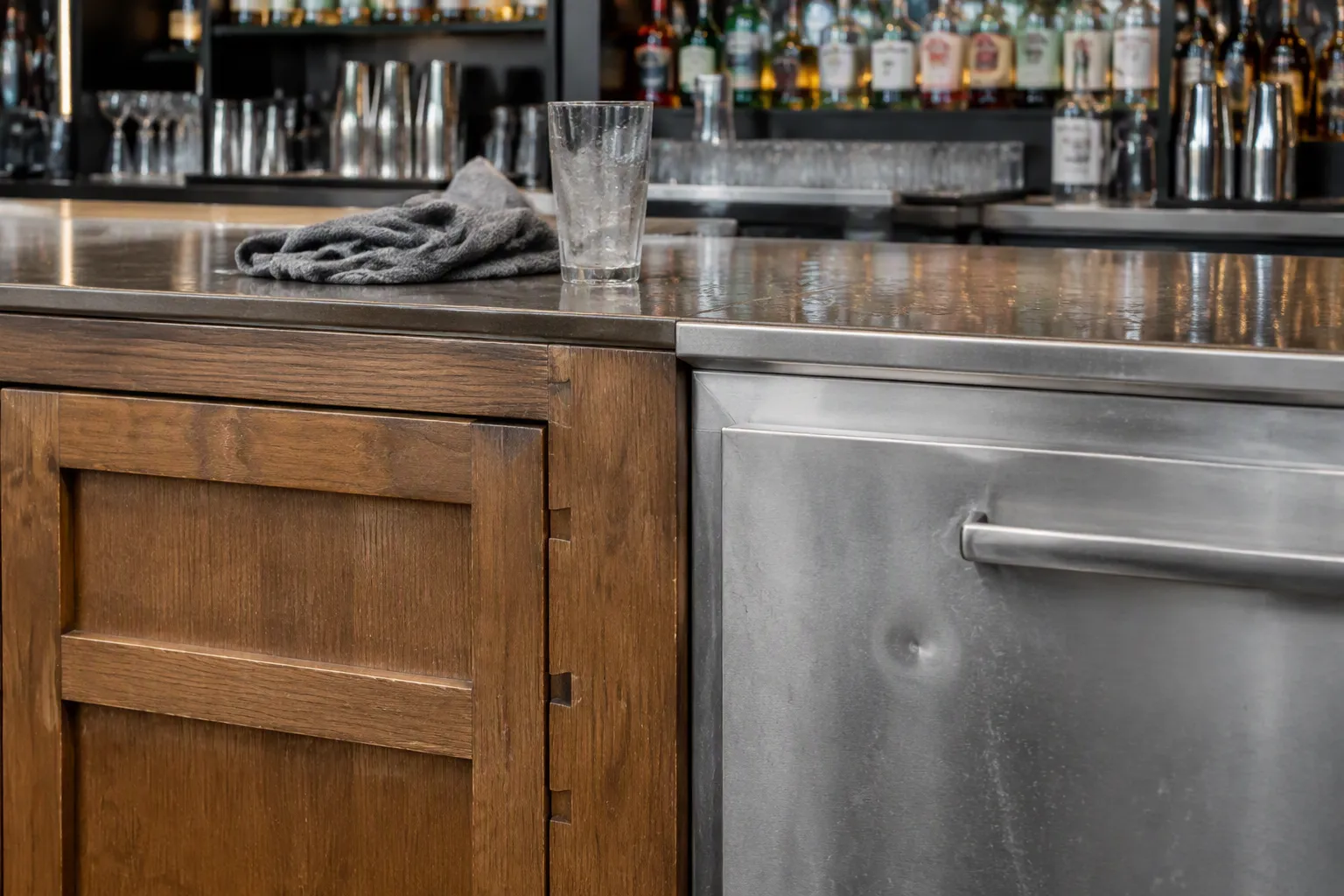
Mortise-and-tenon joints lock wood pieces together without depending on screws alone. This old method spreads weight across the frame. The joint takes stress from repeated opening and closing. Cabinet doors stay lined up. Shelves keep their shape. You avoid the sagging and wobbling that come with weaker building methods.
Hardwood resists scratches from glassware and hits from dropped bottles. A good finish adds another layer of protection. You can sand and refinish solid wood panels when the surface gets damaged. This repair choice makes the cabinet last much longer.
Wood soaks up moisture. Without the right protection, solid wood table tops can get moisture rings, cloudy finish, swollen edges, and visible stains in a fairly short time. You need hospitality-grade waterproof surface treatments. These must be clearly listed and confirmed in writing before production is approved.
Treatment | Moisture Resistance Level | Key Specification Requirements |
|---|---|---|
PU lacquer sealed | Standard / often insufficient for hospitality | Not recommended alone for high-spill hotel bar environments |
UV-cured lacquer | High | Minimum 3-coat application; scratch resistance 4N or higher; complete edge sealing required |
Natural stone tops (granite/marble) | High | Used as an alternative or complement to wood tops for superior moisture protection |
Hospitality-grade waterproof surface treatments | High | Must be explicitly specified and confirmed in writing before production approval |
Marine-grade plywood gives you a strong option for damp areas. Its layered build resists warping better than solid wood in humid conditions. You can choose marine-grade plywood for cabinet interiors and structural parts.
Wood adds warmth and style to hotel modern bar cabinets. You can pick from many stain colors, grain patterns, and finish sheens. This range of choices helps with looks and guest impression in luxury venues.
Quality wood furniture manufacturers use sustainable materials and meet indoor air safety standards. These certifications show a commitment to quality. They offer custom commercial solutions including durable materials and protective finishes that balance design with function. You get commercial-grade cabinets built to last.
High-pressure laminate gives you a good mix of low cost and long life. You get a surface that takes daily wear without hurting your budget. HPL is made of layers of kraft paper soaked in resin. These layers are fused with strong heat and pressure. This makes a hard, non-porous outside. For hotel modern bar cabinets, HPL is a useful choice that looks nice and lasts for years.
HPL resists scratches from glassware and normal bar use. The dense surface stands up to sliding bottles, ice buckets, and serving trays. You will not see the small marks that show on softer materials. The laminate layer takes impact without cracking or chipping. This strength comes from the resin-soaked layers that form a solid shield.
Commercial-grade HPL meets industry standards for wear resistance. The surface holds up to thousands of daily contacts. Cabinet edges need careful work during building. Post-formed edges or matching edge banding protect the core from being exposed. You avoid the peeling and chipping that happen with lower-grade laminates.
The material also resists stains from common bar liquids. Wine, coffee, and fruit juices sit on the surface without leaving lasting marks. A quick wipe removes the spill before it sets. This stain resistance adds to the useful value of the material for busy settings.
HPL handles moderate heat without damage. Hot plates and warmed glassware do not harm the surface. The laminate takes temperatures normal for bar service for short periods. You should still use trivets for hot pans straight from the kitchen. Long heat exposure can make the laminate blister or delaminate.
Moisture resistance gives HPL a clear edge over solid wood. The non-porous surface stops water from soaking in. Spills and condensation do not cause swelling or warping. You get reliable performance in humid bar environments. Cabinet edges and seams need proper sealing during building to keep moisture protection.
HPL works well in back bar areas near sinks and ice wells. The material does not support mold or mildew growth. This property makes it suitable for high-humidity zones where other materials fail quickly. You reduce replacement costs over time.
HPL takes very little effort to keep clean. A damp cloth and mild detergent remove most residue. You do not need special cleaning products. The surface does not show fingerprints or smudges like stainless steel. Daily wipe-downs keep up the look without extra labor.
The material does not need sealing or waxing. Protective finishes are baked into the laminate during manufacturing. This built-in protection saves time and money on ongoing maintenance. You get a surface that stays presentable through years of service.
HPL also resists chemical damage from cleaning agents. You can use common hospitality cleaners without worrying about surface degradation. Avoid abrasive pads that can scratch the gloss. Soft cloths and non-abrasive sponges keep the finish intact. These durable materials give you a reliable option for high-volume bars. The mix of scratch resistance, moisture protection, and easy cleaning makes HPL a smart commercial choice.
Quartz is a top choice for hotel modern bar cabinets. This engineered stone mixes natural quartz crystals with resins to make a surface that handles heavy use. You get a material that resists stains, scratches, and heat without the upkeep of natural stone. The upfront cost is higher than other options. The long-term performance often makes the investment worth it for luxury properties.
Quartz has a non-porous surface that stops liquids from soaking in. Wine, citrus juice, and coffee stay on top instead of going in. You wipe the spill away without leaving a mark. This quality makes quartz different from granite and marble, which have tiny pores that trap stains.
The engineered structure removes the sealing need that comes with natural stone. You skip the yearly cost and work of applying sealers. This benefit matters in busy hotel bars where maintenance downtime cuts into revenue. A simple damp cloth handles daily cleanup. The surface stays clean and presentable through years of service.
Quartz gives outstanding scratch resistance for bar environments. The material has a Mohs hardness of around 7. Glassware usually falls between 5.5 and 6.5 on the same scale. A harder material cannot be scratched by a softer one. This means glassware cannot scratch quartz surfaces. Instead, quartz is harder and can scratch glass. You avoid the ugly marks that show on softer countertops after months of sliding bottles and glasses.
Heat resistance adds another layer of protection. Quartz handles the temperatures of warmed glassware and hot plates during normal bar service. You should still use trivets for items straight from the oven or microwave. Long exposure to extreme heat can damage the resin binders. Proper care keeps the surface good for many years.
Quartz comes in a wide range of colors and patterns. You can choose from solid tones, veined designs that mimic marble, and speckled finishes that hide crumbs. This variety supports design and functionality considerations for different hotel styles. A boutique property might pick a bold veined pattern as a focal point. A luxury chain might prefer a subtle, uniform color that blends with other finishes.
The material also works well with edge profiles. You can specify bullnose, beveled, or eased edges to match your cabinet design. Quartz fits smoothly with stainless steel, wood, and glass elements. These durable materials combine to create a cohesive look. The minimal maintenance needs of quartz free your staff for other tasks. You get a premium surface that holds its appearance through years of daily service.
Picking between wood and metal for your hotel modern bar cabinets means looking closely at how each one holds up in real bar conditions. The wood vs metal question comes up a lot in hospitality design. Each material has its own strengths for commercial use. Knowing how they differ in busy areas, moisture resistance, and looks helps you choose the right one for your venue. You need to think about what your bar space actually demands before you decide.
Wood: Solid wood can be sanded and refinished when worn. Good joinery helps doors and shelves stay aligned.
Metal: Metal supports heavy loads, but thin panels may dent and polished surfaces can show scratches.
What to check: Compare construction quality, panel thickness, and repair options for areas with frequent use.
Wood: Spills and humidity can damage unprotected surfaces. Sealed finishes need regular inspection.
Metal: Suitable grades of stainless steel are easier to clean and generally handle moisture and heat better.
What to check: Prioritize moisture and heat resistance around sinks and hot equipment.
Wood: Adds warmth to guest-facing bar areas.
Metal: Creates a clean, contemporary look and works well on frequently cleaned surfaces.
Combined use: Wood cabinet fronts and metal work surfaces can meet both design and maintenance needs. Explore commercial-grade hotel furniture for related options.
Smart hotel owners look past the first price when they pick bar cabinet materials. The true cost comes from care and how long the materials last. Each material needs a different amount of work, labor, and how often you replace it. Knowing these details helps you pick something that saves money over time.
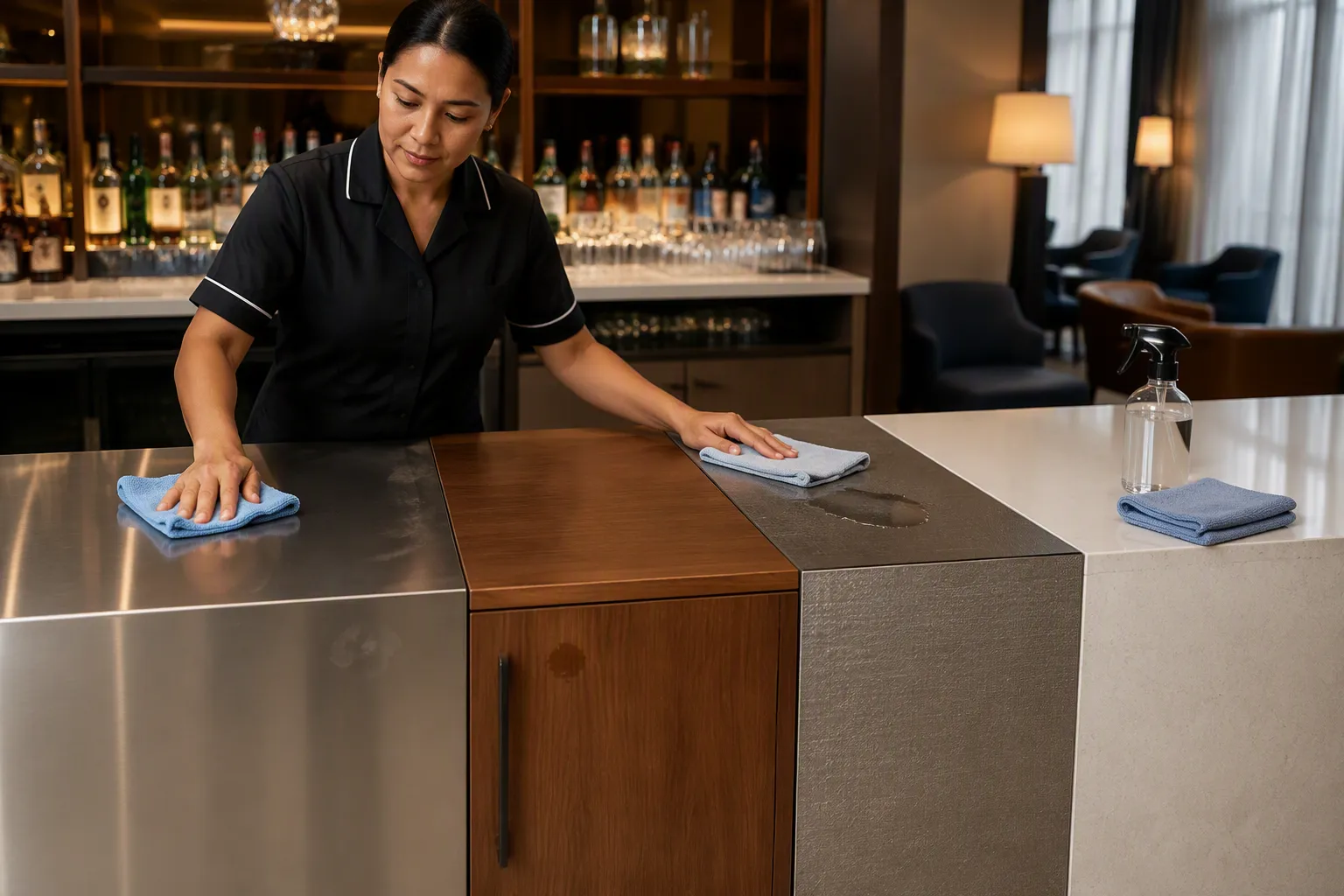
Stainless steel: Wipe away fingerprints and water marks regularly with a soft cloth and a cleaner suitable for the finish. Avoid abrasive pads and prolonged contact with harsh chemicals, which can damage the surface.
Solid wood: Clean with a soft, slightly damp cloth and mild soap. Wipe up spills promptly, especially near joints and edges, and inspect the protective finish for wear.
HPL: A damp cloth and mild detergent handle most daily cleaning. Pay attention to seams and exposed edges, where water can reach the material beneath the laminate.
Quartz: Quartz countertops usually need only mild soap and water. Wipe up spills promptly and avoid placing hot equipment directly on the surface.
Stainless steel: Its resistance to moisture and ease of cleaning can offer long-term value in busy work areas. Surface scratches may still appear, so the finish and steel grade should match the bar’s conditions.
Solid wood: Solid wood can often be repaired or refinished, extending its useful life. Its value depends on sound construction and consistent care of the protective finish.
HPL: HPL offers a durable, lower-maintenance surface at a relatively accessible price. Its long-term performance depends heavily on the quality of the substrate, edge sealing, and installation.
Quartz: Quartz is a strong option for bar countertops where stain resistance and simple cleaning matter. Its higher purchase cost may be offset by lower routine maintenance, though chips and damage can be difficult to repair invisibly.
Compare the full cost: Upfront price is only one part of the decision. Include cleaning time, repairs, refinishing, and expected replacement when comparing materials.
Match materials to each area: HPL can help control costs on cabinet fronts, wood can add warmth in guest-facing spaces, and stainless steel or quartz may suit work surfaces exposed to frequent cleaning.
Check construction details: Cabinet hardware, joints, substrates, and sealed edges can affect service life as much as the visible material. Review these specifications before comparing quotes.
Your hotel's design style should guide what materials you pick for back bar cabinets. High-end hotels do best with quartz and solid wood. Quartz gives a top surface that fights stains and scratches. Solid wood brings warmth and class that guests want in fancy places. Together, these strong items create a nice bar feel.
Boutique hotels often want unique looks more than just function. You can mix wood fronts with quartz tops to get a special style. This mix balances good looks with everyday use. Hotels on a budget should think about HPL and stainless steel. HPL gives great scratch and water resistance for a lower cost. Stainless steel gives a clean, factory look that works for busy service.
Your first budget decides which materials work for your project. Quartz and stainless steel cost more at the start. But both materials need less care over time. You spend less on cleaning supplies, refinishing, and new parts. This lower upkeep often makes up for the higher starting price.
HPL gives you strong performance at a lower starting cost. The material resists scratches, water, and stains without extra care. Solid wood falls in the middle for first cost. You can sand and refinish solid wood panels when they get damaged. This repair choice makes the cabinet last longer and saves your money.
Start by looking at your traffic and spill risk. Busy bars near ice wells and sinks need water-resistant surfaces. HPL and stainless steel work well in these spots. Low-traffic luxury bars can use quartz and hardwood for their better looks.
Think about mixing materials in smart ways. Use stainless steel for work surfaces and wood for cabinet fronts. This way you get strength where it's needed and warmth where guests see it. Top manufacturers are good at both material types. With extensive experience, they make custom commercial solutions for major hotel brands. Their thorough quality checks make sure every commercial-grade cabinet meets strict standards. You get large capacity and reliable quality for your hotel modern bar cabinets project.
The right bar cabinet material depends on how your hotel uses the space. Stainless steel handles moisture and frequent cleaning, solid wood adds warmth and can be refinished, HPL offers a practical lower-cost option, and quartz suits countertops that need easy daily care.
For hotel projects, Hongye Furniture Group offers bar cabinet solutions that combine these materials to suit the venue’s design, traffic, and maintenance needs. Choosing the right materials for each area helps the bar look welcoming while keeping long-term upkeep manageable.
Stainless steel and HPL handle heavy traffic well. Both resist scratches and moisture without constant care. You get reliable performance for busy service. Choose stainless steel for a sleek look or HPL for budget-friendly durability.
Yes, if you protect it the right way. Hospitality-grade sealants and UV-cured lacquers create a moisture barrier. You must keep up these coatings over time. Marine-grade plywood also works well for cabinet interiors in damp areas.
You never need to seal quartz. This engineered stone has a non-porous surface that resists stains. A damp cloth handles daily cleanup. This low maintenance saves you time and money over the years.
Grade 304 works for most indoor hotel bars. Grade 316 offers better chloride resistance for coastal properties. Both resist moisture and heat well. Choose based on your location and corrosion risk.
HPL resists moisture when edges are properly sealed. Post-formed edges or matching edge banding protect the core. You avoid peeling and chipping with quality installation. The material works well near sinks and ice wells.
Quartz and stainless steel cost more upfront. Both need less care over time. You spend less on cleaning supplies and replacement. HPL gives strong performance at a lower starting price.
Yes, mixing materials works well. Use stainless steel for work surfaces and wood for cabinet fronts. This blends durability with warmth. Quartz tops with wood bases also create a premium look.
Look for sustainable and indoor air safety certifications. These certifications show a commitment to sustainability and indoor air safety. You get quality assurance for your project.