Please Choose Your Language
Views: 0 Author: Site Editor Publish Time: 2026-05-22 Origin: Site
Luxury hotel furniture manufacturing is often described as a straightforward sequence of design, material selection, production, and installation. On paper, the process appears linear. In real hospitality projects, it rarely works that way.
Experienced hotel developers know that furniture projects usually do not fail because a factory lacks manufacturing capability. More often, problems are created much earlier—during planning, specification decisions, and coordination between design and operations.
Several issues appear repeatedly across hotel projects:
Furniture dimensions that work on drawings but not in real spaces
A bedside cabinet that is only a few centimeters deeper than planned can reduce circulation space and affect guest movement.
Materials that look premium but perform poorly in operation
Veneer colors may appear consistent in sample rooms but change noticeably under actual hotel lighting conditions.
Furniture details that ignore daily maintenance realities
Housekeeping equipment, luggage movement, and frequent cleaning can create wear much faster than originally expected.
Design decisions that increase future replacement costs
A damaged panel or hardware component should not require dismantling half of the room to repair.
This is why luxury hotel furniture should never be evaluated only at handover.
A project may look flawless on opening day, but the real test begins months later—when occupancy increases, maintenance cycles start, and hotel teams operate the space continuously.
In high-end hospitality projects, long-term performance becomes more important than first impressions.
That is also why premium hotel furniture manufacturing is less about producing individual furniture pieces and more about managing thousands of small decisions across the entire project lifecycle.
This article explores how experienced hotel furniture manufacturers approach luxury projects differently—and where the hidden challenges usually determine project success.
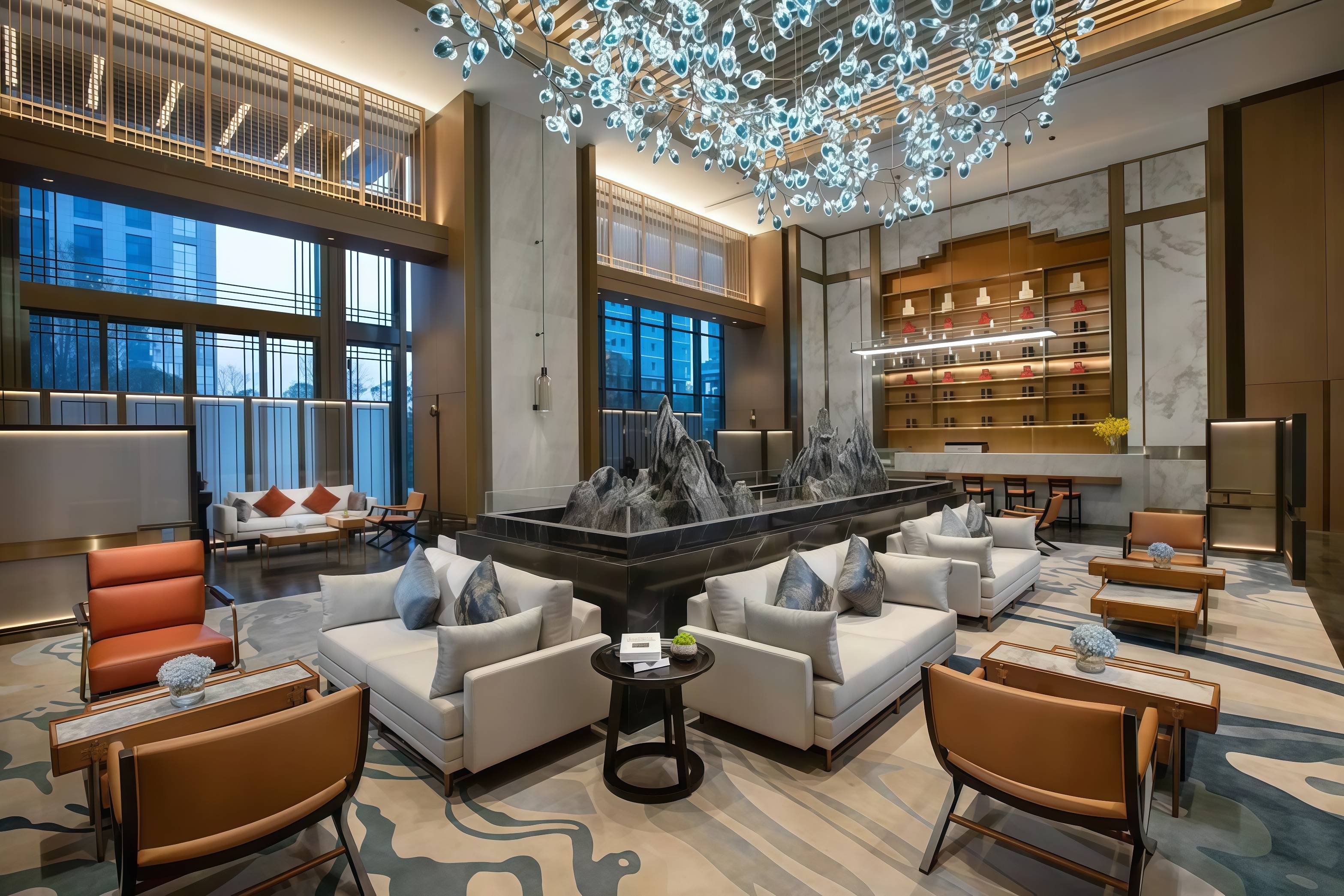
Beautiful renderings do not automatically become successful hotel rooms.
One of the most common mistakes in hospitality projects is assuming furniture design and furniture manufacturing are the same thing.
They are not.
Manufacturing turns that intent into something that can survive years of commercial use.
Many buyers begin discussions by asking:
“What veneer do you recommend?”
Experienced manufacturers usually ask different questions:
How many keys does the hotel operate?
What is expected occupancy?
What cleaning standards apply?
How often are soft renovations planned?
Will maintenance happen room-by-room or floor-by-floor?
These questions change specifications dramatically.
For example:
A luxury resort operating at 65% occupancy may prioritize natural materials and handcrafted details.
A city hotel operating above 90% occupancy often requires more engineered surfaces and faster replacement capability.
The furniture may look similar.
Internally, the engineering can be completely different.
One lesson repeated across hospitality projects:
Late decisions become expensive decisions.
Professional hotel furniture projects usually establish an FF&E package long before production.
This does more than list products.
It defines:
Room standards
Installation sequence
Material ownership
Responsibility boundaries
Replacement logic
One overlooked example is wardrobe depth.
On drawings, increasing depth by 50 mm may seem insignificant.
On site, it can affect guest circulation, luggage placement, and housekeeping access.
Small dimensional decisions often create large operational consequences.
Guests notice appearance.
Operators notice aging.
This difference changes everything.
One experienced hospitality procurement manager summarized it this way:
“Guests only see furniture once. Operations teams live with it every day.”
A common misconception is that premium hotels always use the most expensive materials.
In practice, manufacturers balance:
Appearance
Repairability
Durability
Lead time
Long-term maintenance
For example:
Natural veneer creates warmth and uniqueness.
But areas near minibar stations or wet zones may require engineered finishes because they remain more stable over time.
Similarly, polished stone may appear luxurious but often increases maintenance costs if replacement procedures are complicated.
Good material selection means understanding where guests touch, where staff clean, and where damage usually occurs.
Some of the most valuable improvements are invisible.
Examples from real hospitality projects include:
Reinforcing headboards internally to reduce wall damage
Increasing tabletop edge thickness to resist luggage impact
Standardizing hardware across room categories
Designing removable panels for easier maintenance
These decisions rarely appear in project photography.
But they can reduce years of operational cost.
One fully built room can save an entire project.
Experienced hospitality teams treat mock-up rooms as decision rooms—not display rooms.
Drawings answer dimensions.
Mock-ups answer experience.
Typical discoveries include:
Lighting makes finishes appear darker than expected
Furniture edges interfere with circulation
Electrical locations conflict with furniture placement
Storage feels smaller than expected
One common issue appears around bedside tables.
Design teams often prioritize symmetry.
Guests prioritize charging convenience.
Operations prioritize cleaning access.
Mock-up reviews help balance all three.
Experienced operators usually include housekeeping early.
Because housekeeping sees problems others miss.
Typical comments include:
Corners chip too easily
Dust accumulates behind panels
Hardware is difficult to clean
Finishes show fingerprints quickly
These operational details often influence furniture lifespan more than premium materials.
Luxury furniture is not difficult because of complexity.
It is difficult because of repetition.
Producing one perfect room is manageable.
Producing 300 identical rooms is harder.
Professional production focuses on repeatability.
Key controls include:
Moisture consistency
Dimensional tolerance
Finish calibration
Hardware alignment
Packaging protection
One panel produced slightly differently may not matter individually.
Across an entire hotel, inconsistencies become obvious.
Wood behaves differently.
Lighting changes perception.
Production batches vary.
Experienced manufacturers preserve approved control samples until final delivery.
Because guests may never notice a perfect finish—
but they immediately notice inconsistency.
Traditional inspection checks appearance.
Hospitality inspection checks future performance.
The Question Is:
“How Will It Look After Thousands of Uses?”
Testing may include:
Opening cycles
Seating loads
Abrasion resistance
Edge impact
Surface cleaning simulation
Luxury projects increasingly evaluate maintenance performance rather than only manufacturing quality.
Because replacing furniture after opening is far more expensive than improving it before delivery.
Factories often receive blame for problems created on site.
In reality, installation determines final quality.
Furniture installation overlaps with:
Flooring
Electrical
Lighting
Decoration
Final cleaning
Without coordination:
Panels get scratched
Dimensions shift
Finishes become damaged
Experienced teams sequence installation carefully.
Because every unnecessary movement increases risk.
Successful handovers check more than visual quality.
Questions include:
Can furniture be serviced efficiently?
Are replacement parts accessible?
Does housekeeping workflow operate smoothly?
Can guests use the room intuitively?
Opening day is not the finish line.
It is the beginning of daily operation.
Luxury hotel furniture manufacturing is far more than producing premium-looking interiors. Behind every successful hospitality project are thousands of decisions that influence how the space performs long after opening.
Ultimately, the difference between standard furniture production and luxury hotel furniture manufacturing comes down to three priorities:
Long-Term Durability Over Initial Appearance
Premium hotel furniture is designed to maintain its structure, finish, and functionality through years of continuous guest use—not just to create a strong first impression.
Operational Efficiency Over Design Alone
Successful furniture solutions consider housekeeping workflows, maintenance access, replacement efficiency, and day-to-day hotel operations from the beginning.
Guest Experience Supported by Performance
True luxury is not only what guests see—it is what they continue to feel through comfort, consistency, and seamless usability throughout every stay.
The most successful hospitality projects are rarely the ones that appear the most expensive on opening day.
They are the ones that continue delivering value, efficiency, and guest satisfaction years later.